Manufacturers today deal with seemingly permanent volatility as they need to handle a constant trifecta of policy, labor, and technology changes.
Rather than reacting to market volatility and pricing pressures, W Ratings moves you from a rule-taker to a rule-maker manufacturer where you define the customer value in your categories.
Why Manufacturers Trust W Ratings
As a global leader in off-patent crop protection, ADAMA must create value beyond basic product performance to maintain competitive sales, margins, and volume.
Their Value Innovation strategy addresses this by targeting specific areas where both product gaps and unmet customer needs intersect. To execute this, ADAMA utilized W Ratings across more than 15 countries to identify unique drivers of customer value. These insights allowed ADAMA to build "customer moats"—strategic advantages that strengthen loyalty and prevent competitors from eroding market share and profitability.
Operating in the highly cyclical heavy equipment industry, Finning (Caterpillar’s largest dealer) must constantly scale operations to match fluctuating market demand. Over the last decade, customer preferences have shifted significantly: there is a higher demand for machines with longer service intervals and a growing trend toward renting over buying to avoid heavy capital expenditures.
These shifts have disrupted the traditional business model. To address this, Finning utilized W Ratings research across Canada, Chile, and the UK to identify a more stable, high-growth market: Digital Productivity. By integrating smarter equipment that enhances operator performance or enables full automation, Finning has unlocked new sources of customer value and established more predictable, subscription-based revenue streams.
Facing rising R&D and manufacturing costs, Merck Animal Health must identify new ways to drive revenue and protect margins. As a major player in a highly competitive industry where it trails the market leader, Zoetis, Merck also contends with the inherent volatility of cyclical livestock markets.
To navigate these challenges, Merck utilized W Ratings research in collaboration with BeckAg consulting to uncover unique drivers of value for veterinarians in both the livestock and companion animal segments. This strategic shift focuses on providing value "beyond pills and vaccines." By integrating digital productivity tools and animal intelligence—such as advanced monitoring and data analytics—Merck is building "customer moats" that strengthen veterinarian loyalty and secure new business in an increasingly commoditized market.
As the world’s largest agrichemical company by revenue, Syngenta’s ability to differentiate itself beyond basic product efficacy is essential for driving revenue and margin growth. In an increasingly commoditized market, the company must offer more than just high-performing chemistry to remain competitive.
To achieve this, Syngenta utilized W Ratings across its 10 largest global markets to track and establish "customer moats"—strategic advantages that protect market share from rivals. By analyzing W Ratings data sourced directly from distributors, retailers, and farmers, Syngenta identified universal value drivers while remaining agile enough to adapt to specific local needs. This shifted Syngenta’s focus toward digital productivity and operational efficiency, allowing them to provide comprehensive solutions that deliver value far beyond the traditional sale of chemicals.
The aircraft manufacturing sales cycle is a highly complex process involving long lead times and multiple layers of executive approval. Each stakeholder acts as a different "buying influence," requiring a tailored approach to satisfy both technical and organizational requirements.
To navigate this, Sikorsky utilized W Ratings to decode the decision-making criteria of these various executives. The program provided deep insights into both the rational requirements and the underlying emotional drivers that influence high-stakes aerospace acquisitions. By training their entire sales organization on these methodologies, Sikorsky shifted from a defensive, reactive bidding posture to a proactive strategy. This enabled sales leaders to identify and lead with new sources of customer value, positioning Sikorsky as a dominant, market-leading partner rather than just another equipment provider.
Previous
Next
W Ratings for Manufacturers
The "Proof-of-Value" Buyers Require
Pitching yesterday’s value to tomorrow's buyers
Buyers are more informed but also more paralyzed by risk, leading to longer sales cycles and fragile forecasts. Many manufacturers struggle because they are pitching yesterday’s value to tomorrow’s buyers.
W Ratings solves this by identifying the expected value customers hold today and predicting what they will prioritize tomorrow. Our Moneyball approach to sales replaces gut-feel and legacy metrics like Net Promoter Score with hard data on customer value.
The Trust Paradox is real
While manufacturers have invested heavily in sales tech, productivity has stalled. Success today is less about what you make and more about how much trust you can build through data, transparency, and the ability to de-risk the purchase for your customer.
W Ratings allows you to master the science of customer expectations using emotions, so you can control the terms of the market, command higher prices, and build a durable economic moat.
The lone wolf salesperson is obsolete
You cannot silo sales from engineering. In a direct sales model, the lone wolf salesperson is obsolete. Sales must be multi-threaded, involving engineering and operations early in the cycle to provide the “Proof-of-Concept” selling that modern B2B buyers demand.
W Ratings identifies precisely where you are strong and where you are vulnerable compared to your #1 competitor: what the customer expects. This allows you to lead with “Insight-First” consultative selling, showing buyers exactly how to de-risk the purchase.
Transitioning from "Product-Seller" to "Outcome-Provider"
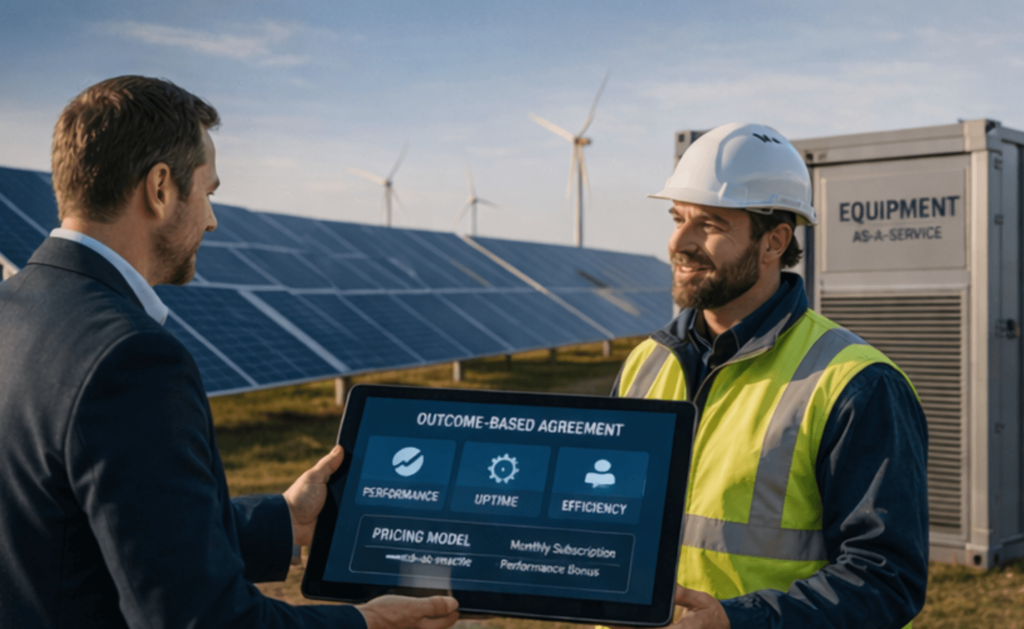
The market is shifting away from simple equipment or chemical sales toward “as-a-service” and lifecycle models. Customers want to pay for more rather than just a physical unit.
W Ratings uncovers “hidden” areas where customers are willing to pay for productivity or other outcomes, and how much more they are willing to pay for them. We pinpoint exactly how much money is being left on the table due to misaligned value propositions.